





|
Ferret Care at Parrish
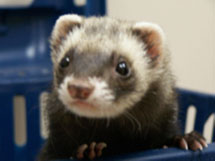
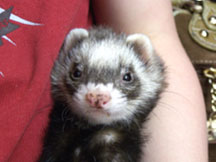
Creek Ferrets are the third most popular mammal pet in the U.S. Dr. Folland has worked with ferrets for over 20 years and regularly attends seminars and reads new publications in order to advance his education and techniques for ferrets. Our entire staff receives ongoing training and new information to provide your ferret with the best care possible.
The First Visit When you first bring your ferret into Parrish Creek Veterinary Clinic a technician will take a history, answer any questions you may have about your ferret, and discuss the doctor’s general recommendations for your ferrets’ health. Next, Dr. Folland will come into the room and perform a comprehensive physical exam, reviewing all the major body systems including heart and lungs, mouth, muscle condition, skin and hair coat, etc. Based on the exam and history he will make specific recommendations for your ferret. The technician assigned to your pet will then send home a binder for you to keep all of your ferret’s records of health inspection. The binder includes husbandry information and specific recommendations for your ferret typed up for future reference.
Ferrets are carnivores and have specific requirements for their diet. They are also extremely curious animals (to put it mildly) and ferret-proofing their living space is an absolute MUST! We will provide you with detailed information about their diet, housing recommendations and other important information as part of your visit.
Recommendations Ferrets
often hide sign of serious illness and a physical examination does
not always uncover these problems. For this reason Parrish Creek
Veterinary Clinic recommends all ferrets have a yearly
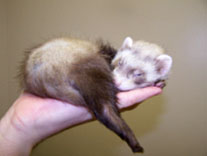
Baby ferrets (kits) or adult
ferrets newly introduced into your home are often infected with ear
mites and/or parasites in the digestive system, because both
conditions are extremely contagious among ferrets. We recommend
testing for these conditions as part of their first visit. They are
unlikely to contract ear mites again unless they come in contact
with another infested ferret, dog or cat. Likewise, they are
unlikely to become reinfected with any intestinal parasites once
they are in their permanent home. Zoonosis Human influenza (but not the common cold) is highly contagious to ferrets. Infected ferrets can give the virus back to people. No other parasites and diseases specific to ferrets are contagious to humans. Services Services we offer for your ferret here at Parrish Creek Veterinary Clinic include: |
|
|
 Husbandry
 comprehensive
physical examination and a complete blood screening (complete blood
count and chemistry panel). More frequent testing may be recommended
in older ferrets as problems are more likely to develop. This allows
us to detect problems early. The sooner we can detect a problem, the
more we can do to help your ferret recover or manage their
condition.
comprehensive
physical examination and a complete blood screening (complete blood
count and chemistry panel). More frequent testing may be recommended
in older ferrets as problems are more likely to develop. This allows
us to detect problems early. The sooner we can detect a problem, the
more we can do to help your ferret recover or manage their
condition.