





|
Avian Care at Parrish Creek
The First Visit When you first bring your bird into Parrish Creek Veterinary Clinic a technician will take a history, answer any questions you may have about your bird, and discuss Dr. Folland’s general recommendations for birds. Next, Dr. Folland will come into the room and perform a comprehensive physical exam, reviewing all the major body systems including heart and lungs, mouth, feet and toes, feather condition, etc. He will make specific recommendations for your bird. The technician assigned to your bird will then send home a binder for you to keep all of your bird’s records of health inspection. The binder includes husbandry information and specific recommendations for your bird typed up for future reference.
Nutrition, environment and mental stimulation are all important to your bird’s well-being. Specific dietary requirements vary from one species to another. Mental stimulation is very important for your bird’s health and happiness. And in general, the larger the enclosure is, the better it will be for your bird. An excellent way to satisfy all three is to teach them to forage for their food using appropriate food and feeding stations. We will provide you with detailed information about your bird’s diet, how to teach your bird to forage, housing recommendations, bathing and other important information as part of your visit.
It is not always possible to tell
how birds feel by looking at them, even with a thorough physical
examination. Parrots, cockatiels, Baby birds or newly acquired adult birds should be quarantined from any other birds in your home (meaning separate air space such as a different room) for at least three months. Dr. Folland may also recommend they be screened for viruses such as Polyoma or PBFD (Psittacine Beak and Feather Disease) based on their history. We can provide you with more information on these diseases at your appointment.
Humans can contract Chlamydophila from birds. This is a bacterium which causes the disease Psittacosis. It is treatable in both humans and birds. It causes “flu-like” symptoms and can last several weeks in a human if left untreated. More information on this is available at the clinic. Services Services we offer for your bird here at Parrish Creek Veterinary Clinic include: |
|
|
 Dr.
Folland has worked with birds for over 20 years. He is Board
Certified as an Avian Specialist by the American Board of
Veterinary Practitioners. He is also the
staff veterinarian for Tracy Aviary and treats sick and injured wild
birds for Ogden Nature Center. He regularly attends seminars and
reads new publications in order to advance his education and
techniques for birds. Our entire staff receives ongoing training and
new information to provide your bird with the best care possible.
All species of birds are welcome here!
Dr.
Folland has worked with birds for over 20 years. He is Board
Certified as an Avian Specialist by the American Board of
Veterinary Practitioners. He is also the
staff veterinarian for Tracy Aviary and treats sick and injured wild
birds for Ogden Nature Center. He regularly attends seminars and
reads new publications in order to advance his education and
techniques for birds. Our entire staff receives ongoing training and
new information to provide your bird with the best care possible.
All species of birds are welcome here!
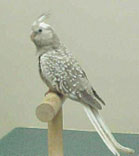 budgies (Psittacines) and Canaries (Passerines) are prey species,
meaning there are animals who hunt them. These birds will hide any
symptoms of illness as long as possible as a self-preservation
instinct, to avoid being eaten or left behind by their flock. For
this reason Dr. Folland recommends all birds have yearly blood
screening (complete blood count and chemistry panel), gram stain,
and Chlamydophila testing. This allows us to see past the bird’s
amazing ability to hide symptoms of illness so that we can detect
problems early, when they are most treatable.
budgies (Psittacines) and Canaries (Passerines) are prey species,
meaning there are animals who hunt them. These birds will hide any
symptoms of illness as long as possible as a self-preservation
instinct, to avoid being eaten or left behind by their flock. For
this reason Dr. Folland recommends all birds have yearly blood
screening (complete blood count and chemistry panel), gram stain,
and Chlamydophila testing. This allows us to see past the bird’s
amazing ability to hide symptoms of illness so that we can detect
problems early, when they are most treatable.